



A few years ago, fintechs mainly offered SaaS solutions to customers. Software product, cloud infrastructure and API integration – this was the basic set of the average player from the industry. The production of equipment was considered, rather, the prerogative of traditional banks, and not a promising direction for the technology business. Recently, however, the situation has begun to change. Companies that have historically focused on digital solutions have begun to launch physical devices or expand their existing product line. What is the reason and why the full stack model is the future, Artem Zhuravlev, director of the Method product of the fintech company Paygine tells.
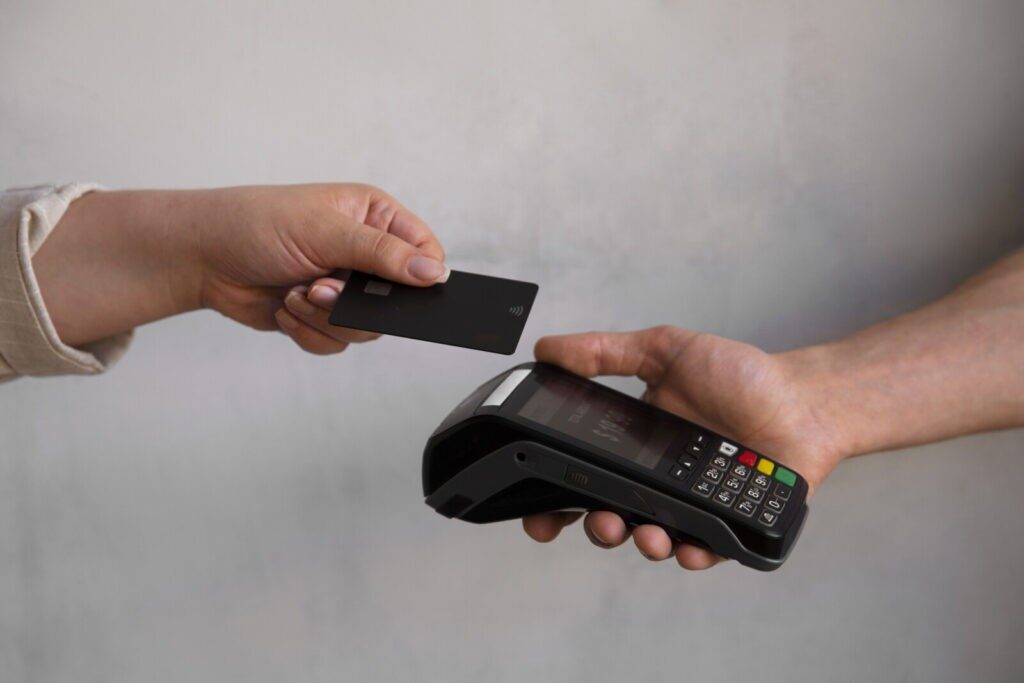
Over the past year and a half, several large Russian fintechs have presented their own equipment for payments. For example, Point Bank made a portable terminal for payment in any location. It connects to a smartphone via Bluetooth, and all operations automatically go through Point acquiring.
Ozon also launched its terminals. The company is also actively developing its own network of ATMs. Until the end of 2026, it will have two thousand devices, and in February of this year, machines began to issue plastic debit cards to customers.
Another example – Modulbank presented Modulkassa, which combines the functions of a cash desk, payment terminal and mobile POS. It accepts non-cash payments by card, smartphone and QR code and allows entrepreneurs to manage sales in stores and at field events.
Therefore, fintech is gradually descending from the cloud into the physical layer of retail. The main reason for this trend is that it becomes almost impossible to compete in the field of SaaS for payments.
Online payments as a basic minimum
According to the results of 2025, the total number of non-cash payments in Russia has grown by 2.2% and amounted to 88% – this is one of the highest rates in the world. Moreover, citizens are increasingly using payment methods alternative to bank cards: QR codes, biometrics, payment applications. Their share in the total volume of non-cash payments has already reached 14.9%.
In this huge market, pure SaaS has become a standard commodity: dozens of providers offer online acquiring services, QR payments, API payments. This inevitably leads to a drop in tariffs. SBP plays an important role in their reduction. Fees for accepting payments in the system are only 0.4%-0.7% of the transaction amount, depending on the field of activity. At the same time, SBP is increasingly popular: in 2025, 18.3 billion transactions worth 103 trillion rubles passed through it. This is 1.4 and 1.5 times higher than in 2024, respectively.
Online payment providers are forced to adapt to market realities, and as a result, even a difference of 0.01-0.02% in tariffs becomes a strong competitive advantage.
The situation for suppliers will worsen when a single QR code for non-cash payment of goods and services will work in the Russian Federation. Now at the cash desks of stores there are often several QRs of different banks and payment services at once. From September 1, 2026, only one code will be used, and the client will be able to choose independently the provider and payment method during the payment. This will lead to further increased competition in the field of acquiring.
As a result, it is no longer possible to make money only on SaaS. Therefore, fintechs should move down the technological stack – to cash desks, terminals, collection equipment. Instead of software products, they begin to develop a complete stack.
Best protection against competitors
The advantage of the hardware segment is that it is better protected from competitors. To create, for example, a network of terminals, you need to organize the production or purchase of equipment, obtain certificates, establish logistics, installation, repair, software updates and support for all customers. This is long and expensive.
Integration of the POS terminal or cash register also does not happen instantly. The business needs to conclude a service contract, agree on a visit from a specialist, wait for the device to be configured. Accordingly, connecting a whole fleet takes more than one month.
For example: Starbucks implemented the Adyen payment platform and more than 2,300 provider terminals in 900 European stores in 7 weeks. For the network «Rive Gauche» the transition to the Russian cash desk system took more than three years. The main phase took 3.5 months, but before that, it took 9 months for analytics and design, after which the development stage and pilot launch began. Now the cash desk system operates in 260 stores.
It is not surprising that the average retail life of a POS system is about 5-7 years. Retailers, as a rule, are not eager to switch to new equipment after all the efforts spent on integration. This distinguishes the hardware segment from SaaS: switching to the new API for payments is much easier for businesses.
Cash desk as data source
Another important advantage of the physical layer for fintech players is the ability to be directly at the point of purchase decision and collect more data. The classic acquirer sees the fact of payment and the amount. More information is available to the comprehensive POS system: what hours are the highest traffic time in the store, how the average check and assortment change and so on.
This data can be used to expand the product offer and additional monetization, for example, the development of loyalty programs, BNPL services right at the checkout, the introduction of dynamic acquiring, when the tariff is determined based on the average turnover per POS terminal per month.
Similar products are already appearing on the market. In particular, Yandex Pay, in cooperation with Gazprombank, offers a terminal for accepting payment by QR code via SBP or in the Split service. When the cashier activates it, the user sees a QR code from Yandex on the screen, according to which you can pay for the purchase in full or in parts.
The special path of Russian fintech
In the Russian fintech industry, the transition from SaaS to full stack is accelerating for two reasons. The first is the regulation of online cash registers. Federal law 54-FZ obliges most sellers to use cash registers, generate checks during settlements and transfer data to the tax office through the fiscal data operator (OFD).
In fact, a unique infrastructure layer appeared on the Russian market, which at the same time became the entry point for fintechs offline. The provider does not have to convince the client to buy an optional service – the legislation creates demand for equipment. Through fiscalization, the supplier can integrate into the daily operations of the store. Next, you can add other financial services: expanding acquiring, doing analytics, offering lending.
The second factor is sanctions and focus on technological sovereignty. There is still room on the Russian market for local players who will offer promising hardware solutions to replace the products of foreign suppliers.
So, quite recently, in July 2026, PSB Bank, Banking and Financial Systems and the Innovation Engineering Center entered into an agreement on the development of Russian POS terminals, related software, platforms and services. The project is being implemented within the framework of the import substitution program. The devices are planned to be mass-produced and installed throughout the country. The focus is precisely on increasing the level of localization.
Full stack through retailer’s eyes
The trend to move fintech companies from SaaS to a full stack is largely beneficial for retailers. Competition for presence at the physical point reduces the cost of owning cash and payment infrastructure. Providers combine equipment, acquiring, cash software and fiscalization and offer more flexible tariffs.
Devices are increasingly included in the cost of maintenance. Ozon Bank includes the terminal and its delivery in the acquiring tariff. To use Gazprombank’s terminal with Yandex Pay and Split, the retailer also does not need to buy a gadget separately.
At the same time, mass technologies that were previously available only to large networks are becoming widespread. Small businesses can now connect sales analytics, transactional data-driven revolving lending, loyalty programs and other advanced tools.
However, the full stack has a downside. What is beneficial to fintech goes sideways to the retailer: the more components one supplier controls, the more difficult it is to abandon it. For a small store, the transition costs may be higher than the potential savings. Therefore, fintech companies today need not only to build a complete stack, but also to prove to the business that the convenience of their system outweighs the risks of dependence on one provider.
At Paygine, we solve this problem through a modular approach. A company can either assemble a complete set of fintech solutions for a business, or embed individual missing components into an existing infrastructure. This design principle allows to improve the reliability and quality of the stack and at the same time leaves the client with freedom of choice.