



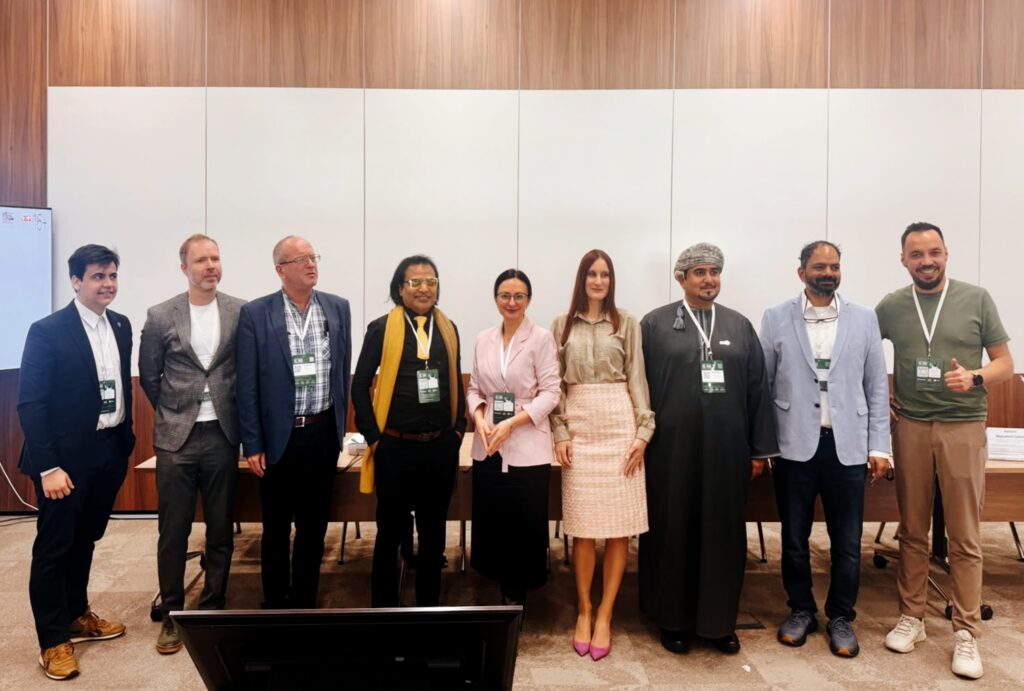
The speed of global change remains one of the primary challenges for businesses of every size and sector. That pace is accelerating year on year, with more than 80% of top executives worldwide expecting it to intensify further – while the share of those who feel “fully prepared” for such shifts is declining. How should one act when traditional planning tools no longer work? What makes a company “antifragile” in the face of turbulence – its technology, its team or its leadership? And why do some financial systems emerge from crises stronger while others collapse? These and other questions were explored at the Kazan Digital Week 2026 forum during a session titled Technological Leadership: Digital Innovation, Antifragility and Islamic Finance. Here are the key takeaways.
Growth under pressure
Crises, constant turbulence and the need to operate amid uncertainty can serve as powerful catalysts for development – in business and in life alike. This is the essence of “antifragility,” a concept introduced by economist Nassim Taleb.
A truly antifragile company – or leader – is defined by the ability to turn pressure into a resource for growth.
“The more I try to break something that is antifragile, the more effort I exert – the more resilient it becomes,” notes Mughees Shaukat, Executive Advisor to the Bahrain-based Islamic International Rating Agency (IIRA).
The capacity for antifragility is inherent to human beings, both biologically and mentally; the challenge is that not everyone is aware of it.
“When an individual identifies their core strength and lives in alignment with it, that is what makes them antifragile,” the expert emphasizes.
Conscious use of one’s inner qualities, rather than mere endurance, enables a leader to navigate crises and emerge stronger, whether in business, science, or family life.
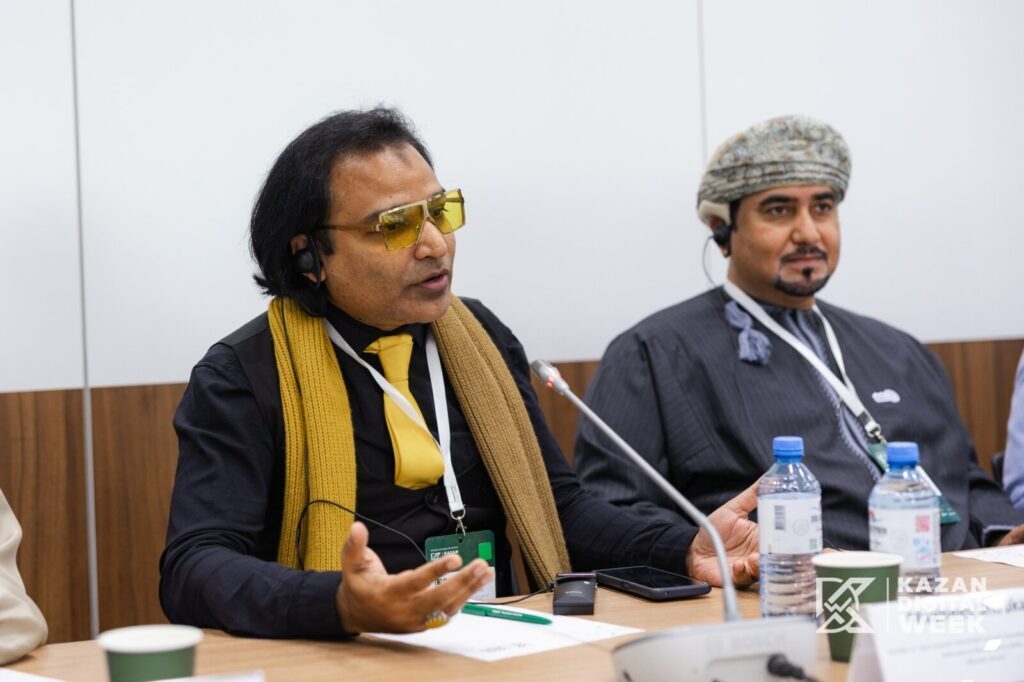
Today’s world exists simultaneously in a digital age and an era of geopolitical, economic, and social turbulence, emphasizes session moderator Alina Valencia, Academic Council member, Associate Professor at Innopolis University, and founder of the consulting ecosystem A-line by Alina Valencia. In such an environment, traditional leadership models lose their relevance. Today’s rapidly changing world demands new skills, cognitive flexibility, and the ability not just to weather crises but to turn them into opportunities for growth.
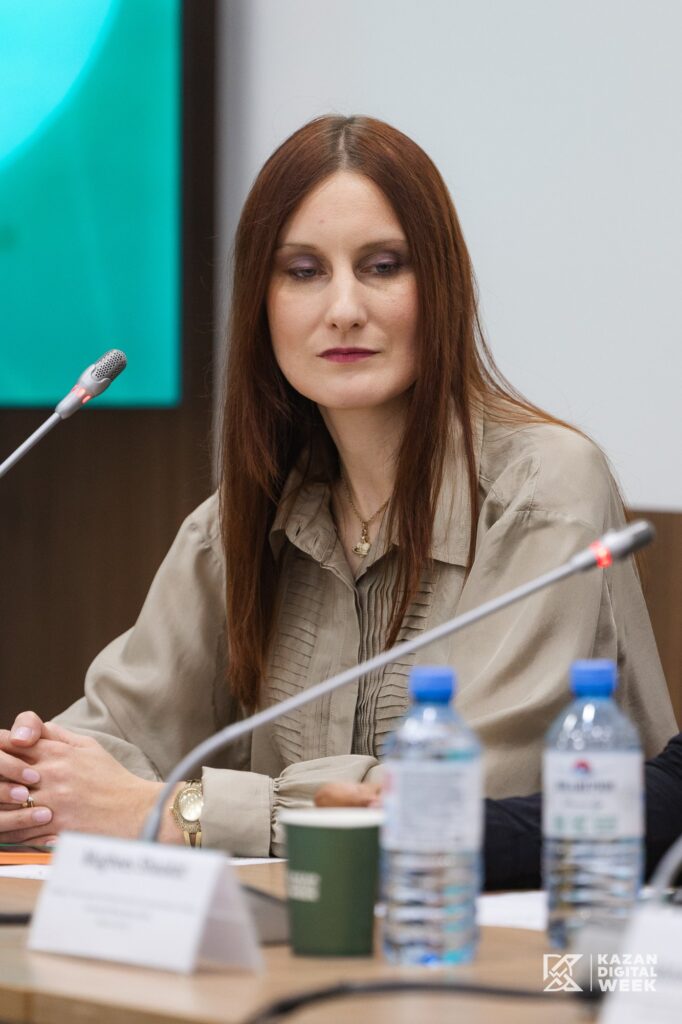
Alina Valencia emphasized that antifragility depends on more than professional expertise and financial literacy. It also requires a strong internal compass. Spirituality, culture, moral principles, and the ability to stay true to one’s core values in difficult circumstances all play an essential role.
Drawing on more than 20 years of consulting experience, Alina Valencia explained that she has always viewed crises as opportunities for business growth. At the same time, she distinguished between economic shocks and crises that affect people’s psychological and emotional wellbeing or sense of purpose. In the latter case, the focus shifts from maximizing profits to protecting what has already been achieved and maintaining stability. This is why, she argued, it is important to develop not only effective business strategies but also the personal resilience needed to navigate challenging times.
Alina Valencia also stressed the importance of long-term strategic planning. Even in periods of uncertainty, when companies may be reluctant to plan more than a few weeks ahead, leaders must maintain a long-term vision while remaining flexible enough to adjust their plans as circumstances change. Another key responsibility for today’s business leaders is effective corporate data management. Companies need to think beyond how they use data today and consider how to preserve it and ensure that it remains accessible in the future.
In these new conditions, business resilience – the ability to maintain operational continuity and organizational stability during crises – becomes the key performance indicator.
“These are deeply connected concepts for both individuals and businesses: going through fire and water and coming out alive,” Alina Valencia emphasizes.
Trust as a foundation
“To me, antifragility is primarily about the readiness to embrace change—the ability to see a massive incoming wave and, instead of being intimidated, ride it to your advantage,” says Artem Genkin, Doctor of Economics, Professor, and founder of the Invest Foresight business magazine.
However, this is not the only factor that warrants attention. In the financial sector, antifragility today increasingly depends on the quality of information. Data and trust in that data are becoming the very foundation that enables organizations to withstand the pressure of uncertainty, the expert notes. At the same time, the very concept of finance is evolving: the ancient maxim of “money has no smell” is giving way to socially responsible investing, where decisions are made with ethical standards and compliance in mind.
“The ethical factor in investing is something that cannot be ignored. Transactions, revenues, strategies, and investment decisions are approved by a community, a state, or an individual investor only if they align with their rules,” stresses Artem Genkin.
Undoubtedly, the growing significance of information also has a downside: for instance, susceptibility to manipulation increases, alongside attempts to influence and dictate investment decisions. Under these conditions, fact-checking and source verification become practical tools for building antifragility.
“The importance of fact-checking as a factor in antifragility has grown worldwide. It helps prevent manipulation and uphold genuine ethical standards in investment decision-making,” Artem Genkin says.
A focus on partnerships
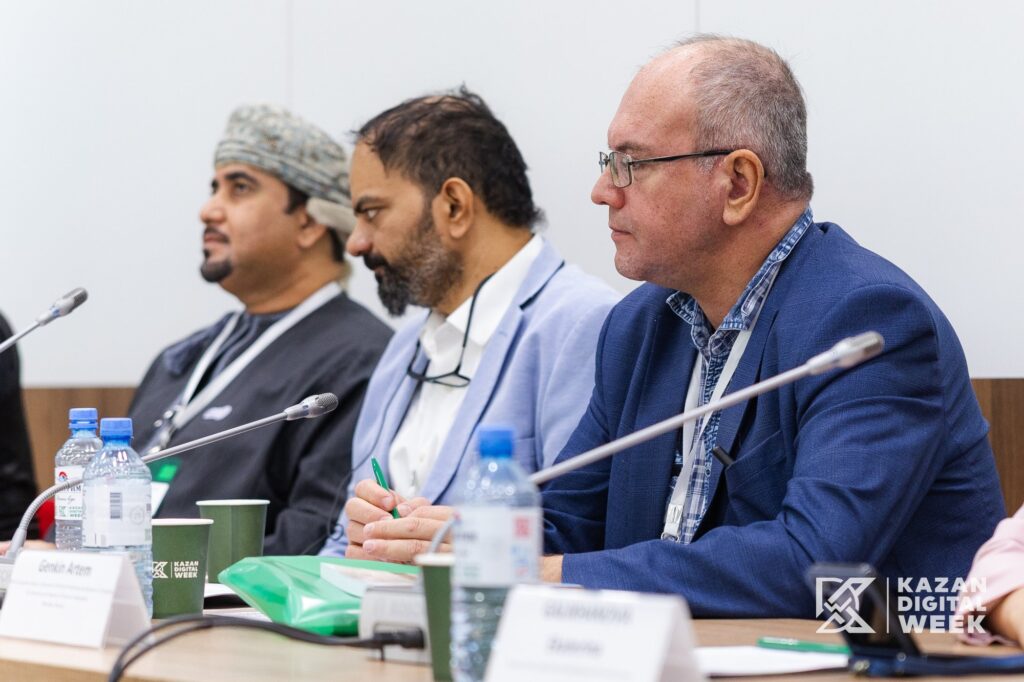
Partnerships are essential to building antifragility in a turbulent world, and this principle lies at the heart of Islamic finance, Mughees Shaukat notes.
In a partnership-based model, risks are shared among participants, allowing the entire system to absorb shocks and turn them into opportunities for growth. Conventional finance, by contrast, is built on what the expert describes as “flawed” assumptions, prioritizing individual self-interest over cooperation. This makes it harder for participants to weather crises.
Mughees Shaukat points out that Silicon Valley’s economy also relies heavily on partnerships. During the 2008 financial crisis, while conventional economies were collapsing, companies in Silicon Valley continued to grow and even raised salaries.
“In Oman, while the conventional financial system was essentially going up in flames, the Islamic finance sector experienced phenomenal growth. It doubled in size while becoming more resilient and profitable,” Mughees Shaukat says.
Technology over scale
Technology has become a critical component of business antifragility, enabling organizations of all sizes and across industries to manage a wide range of tasks efficiently while keeping costs under control. According to founder and CEO of the LeaseHub platform Artur Urkin, the emergence of generative AI models and networks of AI agents means that building a successful company no longer requires a large team. Thanks to innovation, small, cross-functional teams bringing together sales, marketing, content, and platform development have a systemic advantage over traditional structures, enabling them to navigate uncertainty more effectively.
“For me, ‘antifragility’ means being able to carve out a small pocket of certainty amid all the uncertainty around us – and start making progress from there,” Urkin explains.
Another key factor is the ability to grow and evolve efficiently over very short timeframes.
“It is no longer possible to plan or set objectives three or ten years ahead; those time horizons simply no longer exist. I realize that even over a period as short as three days, things can change dramatically. Obviously, this calls for the ability to adapt quickly,” Urkin adds.
A shift in mindset
In today’s world, antifragility also requires a new way of thinking, as traditional models are no longer fit for an environment shaped by increasingly rapid shocks.
“What I learned about macroeconomics and business at university 20 years ago has little to do with the reality we face today,” says Kaleem Mohamed Saleem, Chairman of Harweel Integrated.
This shift is also reflected in relations between the state and the private sector, with both sides seeking new forms of engagement and moving closer together. This includes the advancement of public-private partnerships, the launch of “golden passport” (citizenship-by-investment) programs, and the introduction of tax incentives. Another important aspect is the effort to build stability at home by focusing on the development of local production and identifying domestic resources for growth, while embracing the new rules of the game: flexibility, speed, and the ability to rapidly reconfigure processes.
“Every rule, every budget we discuss, every plan we draw up, and every strategy we develop in areas such as education, security, healthcare, and agriculture should always be viewed through the lens of antifragility,” Kaleem Mohamed Saleem concludes.