



The sports and breeding horse market attracts investors from all over the world. A racehorse can cost anywhere from a few thousand to millions of euros. At the Keeneland yearling auction in the United States in 2026, sales reached $531.5 million. The deals attract stable owners, professional trainers, breeders and private buyers. Irina Fedotova, master of sports and champion in show jumping with her own number of horses, spoke about whether it is worth investing in such an asset and what place horses can occupy in the investment portfolio.
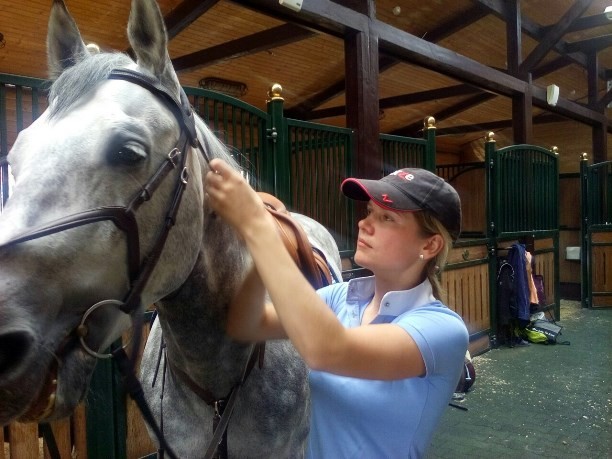
How a horse became part of financial schemes
For centuries horses have been a friend, fighting companion, au pair and vehicle for man. However, with the advent of auctions, bloodline books and sports statistics, the breeding and sports animal market began to develop. Horses gradually turned into a valuable financial asset.
The turning point was the sale of the Elegant Prince colt at Keeneland Auction in Kentucky in 1975 for $715,000. This deal was a record for thoroughbred yearlings. Today, taking into account inflation, this amount corresponds to about $4.2 million.
In the sports horse market, the increase in value is most often associated with the animal’s performance in competition, health, training and prospects. A young horse with a good background may be relatively inexpensive, but its athletic potential is rated significantly higher. A horse already competing internationally costs more because the buyer sees results.
In addition, the cost of a horse depends on its training and age. For example, I bought my first horse at the age of seventeen (a young foal), because young horses are cheaper than adults. When he grew up, I resold him and bought a more prepared horse.
Who and why invests in horses
In the sports horse and racing market, investors are owners of large equestrian clubs, stables, trainers, famous personalities from related sports areas and even politicians. Their motivation combines sporting ambition, prestige, interest in breeding, potential prize money and resale, and a desire to diversify capital.
One of the largest players in the global thoroughbred racehorse market is Godolphin, an international racing organization founded by Sheikh Mohammed bin Rashid Al Maktoum of Dubai in 1992. Godolphin trains racehorses, competes and acquires promising animals. A separate area of the Al Maktoum family is Darley, an organization engaged in breeding thoroughbred riding horses and mating services.
In October 2019, Godolphin acquired a yearling at Tattersalls – a stallion from Dubawi, the half-brother of the racehorse Barney Roy – for 3.6 million guineas (approximately $4.65 million). It was one of the most expensive sales of the year in Europe. The purchase was intended for a further racing career, and in the future, a successful stallion represented breeding value.
Another type of investor are the owners of equestrian clubs, leading world coaches. In 2013, the jumper (ten-year-old gelding) Palloubet d’Halong was acquired for about 11 million euros by Jan Tops, coach of the Qatar national team, formerly an athlete and tournament organizer. The horse attracted attention with results at the international level and was supposed to perform under the saddle of Tops’ wife, Australian athlete Edwina Tops-Alexander. The horse was later resold to the state of Qatar.
In 2016, Irish jumper MHS Going Global, who competed at the Rio Olympics, was sold to Greek heiress Athena Onassis for an amount estimated by the media at 10-12 million euros. In show jumping, the price depends not only on the bloodline, but also on the opportunities demonstrated: the horse performed at major competitions and received international class results.
In February 2024, the racehorse Caldwell Potter was sold at the Tattersalls public auction in Ireland for 740 thousand euros, setting a record for National Hunt horses sold at public auction. The buyer was a syndicate that included former Manchester United coach Alex Ferguson. The horse had already won Grade One races and was due to move on to another trainer after the sale.
For some buyers, the horse is an athlete and a participant in the competition, for others – it is an animal that causes delight and inspiration, for others – a matter of life to which you can devote your expertise, accumulated over years of training or veterinary support. In Russia, such transactions are still taking place at the level of private clubs and equestrian projects, but investor interest in them is growing quite rapidly.
What horse breeds are the most expensive and why
Racing is dominated by Thoroughbred horse breed. In show jumping and dressage, sports horses of European breeding books are widely represented, including KWPN (Dutch warm-blooded), Hanoverian, Holstein, Belgian warm-blooded, Selle Français and Irish Sport Horse. These names refer to tribal books with different selection traditions. However, the price of an animal is determined not only by the breed.
In the racing segment, the high price of a yearling is often explained by bloodline: the buyer evaluates the results of the parents, the exterior and veterinary indicators. For a sports horse, jumping technique or quality of movement, handling, health, and experience are also important. Therefore, a promising foal can be expensive. For example, in 2025, the C-Bra van het Bokt show jumping foal was sold at Flanders Foal Auction for 402 thousand euros – a record amount for a jumping foal at this auction.
However, a horse that consistently performs at a high level will always cost even more, because the highest amounts are paid not for potential, but for a confirmed result.
A horse’s place in an investment portfolio
Technology is changing the investment landscape. It is now easier to access the stock market, bonds and real estate. Fractional ownership of unique assets is also gaining popularity: in the Knight Frank review for 2026, experts note that there are platforms that open access to shared ownership of rare objects – and horses can hardly be called a common investment tool.
A sports horse is a niche asset. Unlike stocks or bonds, it does not have an exchange price, daily liquidity and a standard valuation mechanism. The sale can take months, and the cost depends on health, age, results, trainer, bloodline and market condition. In addition to the purchase price, the owner bears the constant costs of maintenance, training, veterinary care, transport and participation in competitions.
Therefore, a sports horse cannot be considered a substitute for a deposit, bonds or a diversified investment portfolio. It can be juxtaposed with other collectible and alternative assets, such as art or rare cars. Expertise and emotional engagement are important in this niche. With the right approach to content and asset management, you can earn several times the purchase price on resale, and the buyer will most likely find you himself if he sees the results and growing demand.