



In the restaurant business, there is an expensive habit of taking another infusion of money for a management decision. The restaurant does not reach the required indicators – we will update the interior. Guests do not return – let’s change the boss. The economy does not converge – we will come up with a new concept. It is desirable that the discussion of the name, dishes and shade of the walls for some time could not discuss financial losses. The consequences of such decisions can be dire. You can avoid them if you understand the causes of losses before new investments.
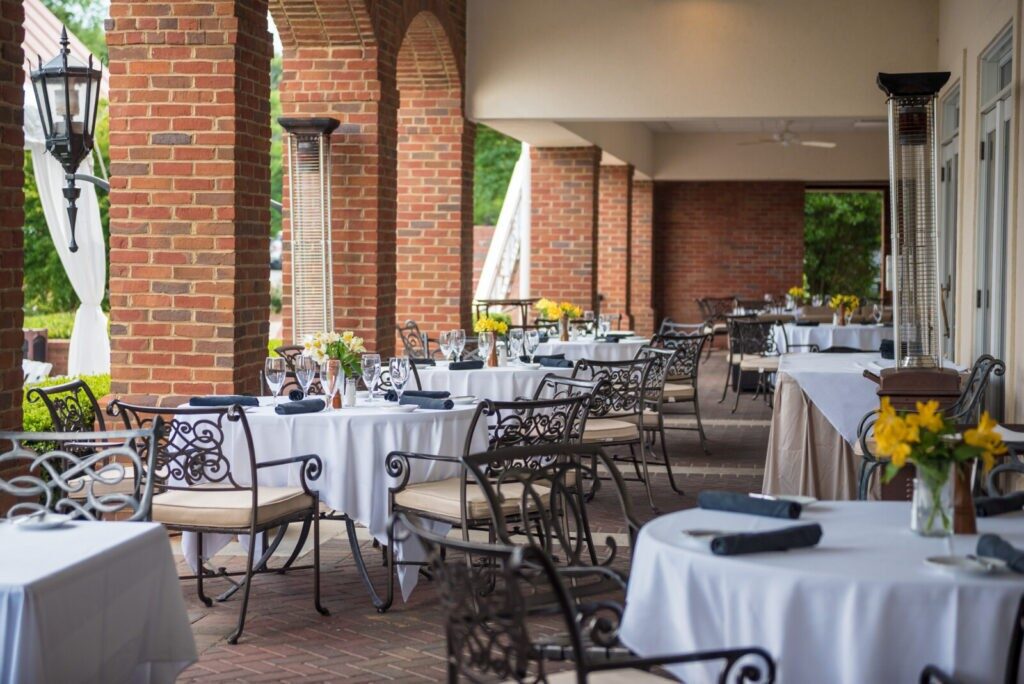
The interior and serving of dishes in restaurants are often admirable, but if beauty is offered to cover the lack of a working business model, new investments will only delay the solution of previous problems. Before investing additional funds in a project, it is important to understand why the institution is losing money, what new investments will change, and on what basis you expect to get a different result. If there are no answers, instead of profit, you risk getting another expense item.
Temporary difficulties must be explained
Seasonality, delayed launch, road repairs near entrance or the departure of a key employee can complicate the life of a completely viable restaurant. At the same time, the loss itself is not yet a verdict, but the phrase “now it’s hard for everyone” cannot be considered an explanation of the current situation. A temporary problem always has a cause that can be checked and consequences that can be counted. That is, you understand what happened with demand, the average check, the number of guests or expenses, and you see what actions can correct the situation and how long it will take.
If, on the other hand, a full hall from morning to evening, exceptionally generous guests and an almost free team are needed to make the restaurant profitable, and with a realistic load, it remains unprofitable, the problem is most likely in the business model. In this case, additional investments will only help to cover losses for a while, but will not eliminate their cause. Therefore, it is important to be able to distinguish a restaurant that can potentially make a profit from a project that shows it only in the presentation.
Figure out the numbers first
Before investing in a restart, audit and understand the causes of losses. Find out exactly where the restaurant is losing money? Why? What needs to change and how much will it cost? What will be the result of the changes? Who is responsible for their execution?
To make a decision on additional financing, you need reliable reports and data on income and expenses, cash flow, revenue by directions and time of day. It is also necessary to study the cost, purchase prices, write-offs, inventory results, payroll, rent and liabilities to suppliers. In addition, it is important to know the marginality and popularity of dishes, the real cost of compliments, discounts and other manifestations of generosity.
Separately, see what happens to expenses when revenue changes. Why there are fewer guests and purchases remain the same; volume of work changed, and no one revised the schedules; the dish is popular, but you earn suspiciously little on it?
Be sure to compare comparable periods. For example, comparing January with the average for the entire last year will not give a reliable picture of the work of the business. After all, it is necessary to take into account seasonality, changes in prices, work schedule and revenue composition. At the same time, you should not delay with reports. In one of the restaurant projects, expenses grew for several months, and the January operating report was provided only at the end of February. With such a delay, it is difficult to assess the scale of the problem in a timely manner and adjust the costs. When the owner finds out about the problem too late, the money has already been spent. And no new concept will remedy the situation if decisions are still made based on late data.
The restaurant may appeal to guests and remain bad business
The full hall acts almost hypnotically on the owners. Success seems obvious. People sit, take out dishes, glasses ring. But busy desks don’t guarantee profit. You can collect guests with discounts, sell the most demanded positions with insufficient margins, keep excess staff and support revenue with expenses that eat it up. And outwardly, everything will look very decent. Therefore, it is important to share the attractiveness of the concept for the audience and the viability of the economy. It is worth preserving good cuisine and a demanded atmosphere, but at the same time understanding how much it costs to maintain them and whether they bring profit.
In a restaurant with a casino or other complex business, the valuation is even thinner. Part of the cost of food and service can help earn the main direction. Then it is important to figure out what effect they give and how to measure it. Demanding self-generated profits from each unit is as superficial as allowing any expense under the pretense of “it’s for the guest.” Hospitality deserves generosity, but uncontrollability can cost a restaurant dearly.
Sometimes you need to change control
Before completely reinventing the restaurant concept, check out the elementary processes. Can I trust inventory data? Are the routings followed? Who approves purchases? How are schedules compiled? Who deals with budget deviations and what happens after they are discovered? If these questions are answered evasively, it is premature to discuss the new interior and menu. A restaurant can suffer from poor management under a perfectly viable concept. Then a large-scale format change will destroy some of what is still working and add repair, training and promotion costs.
A separate problem arises when the owner invites the manager, but you reserve the right to cancel his decisions every day. It requires discipline, while making exceptions for your favorite employees, ask to cut costs, but do not allow to reconsider the usual privileges. In such circumstances, the restart budget becomes the price of refusing to change one’s own behavior. Responsibility for the result must be accompanied by authority. Otherwise, the manager will not be able to make the necessary changes, and the restaurant will continue to work according to the previous rules.
The change of concept should be based on demand
The opportunity to create something in itself is very attractive. But interest in the launch does not exempt from the need to ask yourself an unpleasant question. Who needs it here and for this money? Let me give you an example from practice. I opened a restaurant in Batumi in 2022, when the city received many new residents from different countries. Because of this, the composition of the audience, its expectations, habits and attitude to the service changed. Even the language of communication became a sensitive part of the guest experience. It showed how important it is to look closely at the environment in which we operate. One cannot once draw up a portrait of a guest and assume that he will forever remain the same and the market opportunity of one period does not have to be preserved indefinitely. Therefore, before restarting, you need to re-evaluate the audience, its solvency, competitors, location and reason for the visit.
This requires experience. Go beyond your own hall, travel, try, study strong projects. In a place with weak competition, it is easy to take your own championship for the professional top. Observation helps to see the possibilities, and their viability must be confirmed by calculations and checking demand.
When to invest and when to close
Additional investments in the project are justified if you have identified the source of the problem, saved the demanded core of the product and calculated the cost of the changes. The budget should include not only repairs and equipment, but also the shutdown period, restart, team training and working capital. At the same time, realistic scenarios, milestones and indicators are needed by which you evaluate the result.
Before large-scale expenses, some of the assumptions should be checked using a limited menu, a new offer at certain hours, a small event or a demand test. The promise “guests will definitely go” should at least try to meet reality before signing the next major bill.
Before starting work, determine the limit of additional investments. How much are you willing to invest? At what results will you continue to work, and at what stop? Without these conditions, each next payment will be explained by the fact that there is very little left before success. And the restaurant business knows how to stretch this “a little” for years.
Closure should be considered when realistic revenue does not cover expenses, lease conditions do not leave room for profit, demand is not confirmed, and the necessary investments are difficult to justify with a future result. Sometimes the output can be a decrease in area, another mode of operation, a more compact menu or a change in format. But these solutions also need to be digitized. The very word “optimization” does not bring money.
Compare the cost of continuing, restarting, and closing. Each of these options has a price. Consider commitments to team and counterparties, lease termination terms, and opportunities to sell equipment. It is difficult to close the once created project, especially when there is a lot of personal in it. Taste, ambition, years of work, relationship with the team. However, the ability to stop in time also refers to professional maturity. “We have already invested so much” is the weakest argument in favor of continuing to work unchanged. Your time and money has already been spent. The next solution concerns resources that can still be saved or used more efficiently.
The restaurant deserves the second chance only when it is clear what exactly you will do differently. Financing your own hope under the guise of investment is too expensive even for a person with good taste.

By Victoria Moroz, restaurateur, entrepreneur and expert in the field of creating and launching turnkey restaurant projects