



Digital solutions have come to professional sports to stay. Wearables such as trackers and touch sensors that record the athlete’s health indicators and movements, systems for preventing and promptly diagnosing injuries, smart training grounds and soccer fields turn sports into an error-free business with minimal risk of incorrect refereeing or serious injuries. These innovative solutions are developed at the intersection of IT, sports and medicine, an integration that holds great promise, including in terms of investment. Sergey Yermilov, CEO of the TechnoSpark cluster of sports startups, talks about the most inspiring projects for professional sports and growth prospects for the Russian SportTech market.
The high-performance market
According to Research and Markets, the Global Sports Technology Market was estimated at $11.7 billion in 2020 and was projected to reach $41.8 billion by 2026. This shows intensive growth and the high demand for digital solutions in professional sports.
The Russian SportTech market is growing with the global trend. According to my observations, the first SportTech projects in our country began to emerge around 2015, and the segment began to grow fast in the late 2010s. Many domestic sports clubs have been on this high-tech track for a long time, introducing digital into the training process independently, or with the help of specialized market players and research centers. An ecosystem of relevant startups and developers of high-tech solutions for athletes has grown since then around the demand for new digital technologies generated by various sports institutions.
Ready, steady, import substitution!
Unfortunately, the overwhelming majority of high-tech sports products have been imported to Russia. Even now, we do not have high-quality domestic alternatives to foreign products to satisfy every segment of the sports market. Let me give you just one example. Russia makes practically no high-tech hockey gear; this market is dominated by Bauer, СММ and Warrior products. These three manufacturers have essentially monopolized this market niche.
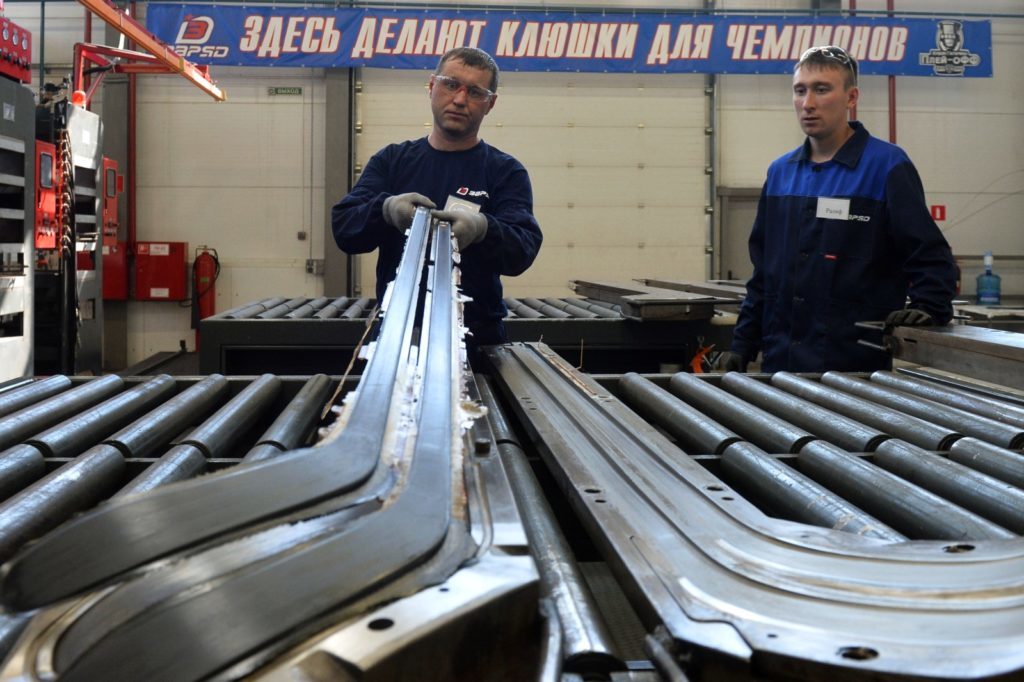
There are a few gratifying exceptions though: Russia has a facility that makes hockey sticks that are not inferior in quality to imported ones. I am referring to the Zaryad plant. It might seem like a small achievement – how difficult can it be to make hockey sticks? In reality, making sticks requires a complex proprietary technology, which is carefully guarded. There are many fine points, from the constituent materials to the specifics of processing and the equipment used. This is the know-how. Of course, when the plant was being built, no one had yet thought of making sticks as import substitution. They were simply a response to competitors, a very popular product and an offer made to the market at the right time.
Hockey sticks are not the only big product of the Russian sport market. SportTech in the country has really woken up and started launching noteworthy developments and technology in the past years. Most importantly, these products are useful for everybody in the sport industry and can replace imports. For example, the Handball Technology startup produces the only Russian handball wax that is used to improve hand grip. Select and Trimona used to be the dominant brands on the market. Now there is a Russian product, made only of Russian ingredients.
Stakes on tracking
Highly accurate fitness analytics and tracking systems are the most promising and appealing technology sectors in professional sports when it comes to investment – in particular, tech solutions focused on boosting health. Athletes’ achievements in professional sports largely depend on quality analysis of their physical parameters. Professional sport clubs even have departments tracking athletes’ fitness parameters and guiding coaches when it comes to adjusting fitness routine and diet of a particular athlete if they show decline in performance.
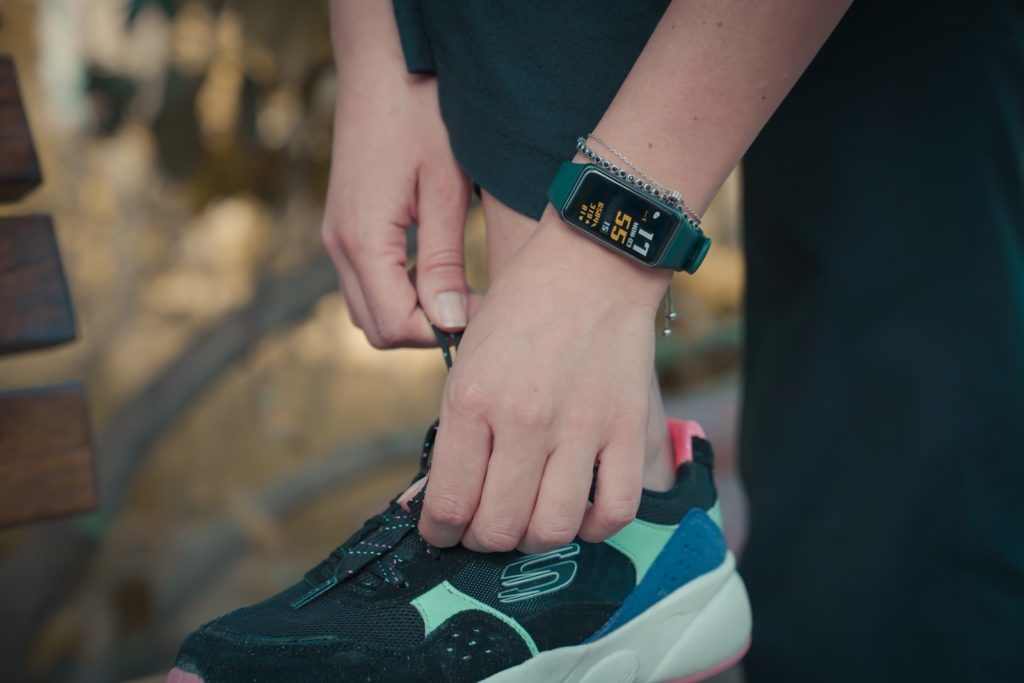
InMotion is the Russian company focused on this SportTech niche. The company develops a comprehensive system of analytical software and wearables to collect data about athletes’ fitness and movement. These smart devices are helpful in team sports like football, hockey, handball and others. Tracking and analyzing data helps team players train and recover more effectively because the training strategy and tactic now take into account athletes’ actual physical condition and their workload.
Example: a midfielder spends a major part of a game in the middle of the field. It is a very active role and the InMotion system tracks the athlete’s accelerated movement and higher heartbeat, which means it will be able to show anomalies and potential cardiac disorders. This unique product with no foreign alternatives is in high demand by sport teams and training academies alike.
A hit in the head
Early concussion detection trackers are equally popular in sports. It is a serious problem indeed: often, there is no possibility to immediately diagnose a serious head trauma in an athlete and consequences of brain concussion may emerge hours after it happened. The usual symptoms are dizziness, nausea and general fatigue. In the heat of the game, an athlete may not even notice getting a concussion. Sport industry professionals around the world have been trying to solve this problem. According to Grand View Research, the global market for wireless brain trackers will reach $743.3 million by 2027, growing at a steady pace of 9.5% per year.
A Russian startup called JarHead is working in this niche. The company invented early detectors for brain concussion that can measure the power of a blow and help quickly diagnose cranio-cerebral trauma. If a puck hits a player’s helmet, the tracker will instantly measure the overload. Based on this data, the team doctor can promptly determine if the athlete did get brain concussion – and adjust their training plan and competition schedule.
Junior teams can particularly benefit from this type of detectors. In fact, anybody can see for themselves that this product must be on the market by just visiting a training session of a junior hockey team. If a puck hits a helmet, ringing in the ears for 20 seconds is guaranteed.
Head injury detectors are especially in-demand among Paralympians. JarHead tested the technology on professional goalball players with visual impairments. For them in particular, a hit in the head may cause a critical trauma and the detectors can save them from serious injuries. Modern diagnostics is often a matter of life and death. Overall, brain concussion detectors can be useful in all sports where athletes wear protective gear.
Hard tech and AI – a referee’s best helpers
And, of course, sports technologies that use elements of virtual and augmented reality and artificial intelligence (AI) are the most popular and promising in terms of investment. Artificial intelligence in sports devices provides the best assistance in game analysis (due to big data analytics) and making just refereeing decisions. Whan can be more important for the sports industry than fairness and security that are provided by the synergy of digital and deep technology? The conclusion is simple: everybody wins from using deep tech and digital products.