



These days smart gadgets can measure pulse or blood pressure and grade sleep quality. More complex matters are to be referred to a doctor. But that will only be the case for the time being, since self-diagnostics devices keep appearing. KardiRu medical device, for example, right now allows regular heart monitoring and resting electrocardiogram (ECG) recording. Healthy Networks startup from Belarus decided to go even further, and launched Lung Passport service which by employing artificial intelligence technology can diagnosticate lungs problems.
It is noteworthy, more and more startups are currently entering the market exploiting neural networks’ diverse capabilities in forecasting efficacy of points of sale, for instance, or in detecting vegetable diseases.
Sound analysis
Helena Binetskaya and Maksim Zyabko conceived the idea of the Lung Passport monitoring system back in 2016 when their baby daughter got sick and doctors were unable to name the cause of the coughing problem for a lengthy time and hence to prescribe a proper cure. That was not an exceptional case, Helena says, noting that up to 35% of all calls to an ambulance service are made with no real need, while pulmonary fever claims more lives of the kids aged under five, then any other inflectional disease.
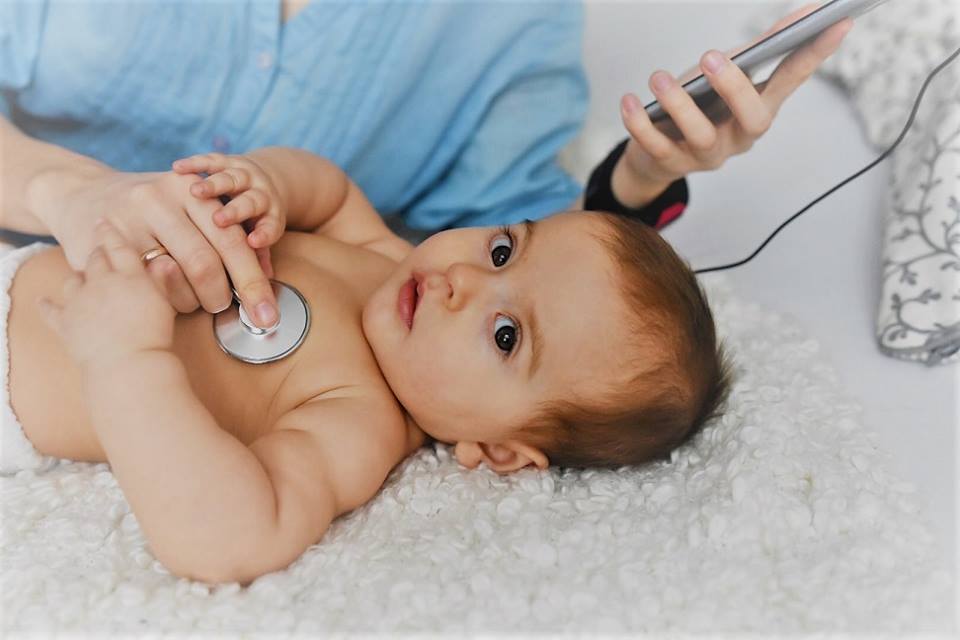
Instead of attending doctors, preliminary diagnosis for both a baby and an adult may be easily arranged at home. According to the project founders, all it takes is a digital stethoscope of the company’s original design and a special smartphone application. The diagnosis results can then be discussed with a doctor.
A digital stethoscope is to be applied to 14 points of a human body to record the respective sounds. The device makes easily and widely available high precision diagnosis of asthma, bronchitis, chronic obstructive pulmonary disease (COPD), and pulmonic fever. The device is suitable for both an initial diagnosis and a chronic patient monitoring as it helps to timely identify a disease recurrence.
“Over 500 million people suffer from such diseases as asthma and chronic bronchitis, while over half of those regularly forget to take their pills or renew prescriptions which results in disease recrudescence or patient hospitalization, even though those could have been avoided”, Helena Binetskaya explains.
Teaching a neural network
The startup’s main feature is a very high diagnostication accuracy. The verdict is drafted by Lung Passport’s neural network which compares the sounds recorded by a patient to the lung sound recordings stored at its lung sound library which are characteristic of various illnesses, and does it within seconds.
The neural network is being taught by the sounds collected from the project partner, Belarusian Medical Academy of Postgraduate Education’s Department of Pulmonology and Tuberculosis. For neural learning, only recordings of the patients with confirmed diagnosis were used after their review by a medical board. In January 2018 alone some 3,000 sound sets were processed.
Now, the team is about to launch the tests of their device in three Minsk hospitals. The test results are expected to confirm a proven diagnostication accuracy. If the process is as faultless as expected, the product will be ready for a pilot test next March.
According to the Lung Passport’s assessment, a diagnosis accuracy is 80% at the moment. As Helena Binetskaya notes, doctors make more mistakes and the traditional lung sound analysis can only ensure a merely 62.5% accuracy.
The project founders intend to promote it within the B2B format (for pulmonologists in case of Belarus and general practitioners in the western medical markets), whereas in the future the technological solution will also be available to the patients. A device is anticipated to be priced at somewhat $50.
Per aspera ad patiens
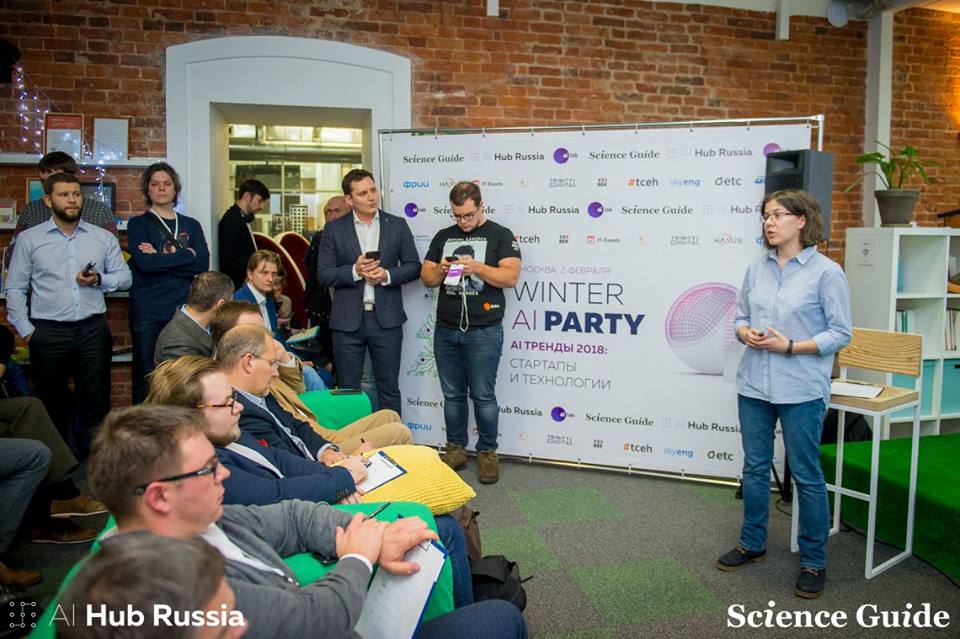
The service was named the best Belarus’ startup project in 2017. It was also awarded a chance to undergo an education program at New York-based Starta Accelerator set by Starta Capital investment fund. Some investments have also started to pour into the project as Spacemind Capital fund has already contributed $100,000. In January 2018 the project won a startup battle arranged by Russia’s Science Guide.
“I am familiar with Lung Passport as I have attended the project’s presentation. I find it is an interesting technology with every chance to succeed”, RMI Partners venture capital company’s Managing Partner Maxim Gorbachev says.
As he notes, telemedicine and artificial intelligence in healthcare are major drivers for the medical gadgets market growth.
“Nowadays the main diacrisis development trend is shifting from big laboratory systems to compact solutions to be used at patients admission locations (points of care). The next step will be designing solutions to be applied by patients themselves (points of patients)”, Maxim Gorbachev states.
At the present stage, the principal risk for the project is the product commercialization.
“The company will not have to convince merely ultimate consumers, but doctors as well, since they must be certain they get clinically applicable information and can recommend their patients to use the device”, Gorbachev thinks.
“The project has few more years to go before it can start selling the current prototype”, Alexei Gubarev, Haxus venture fund cofounder, believes.
But in his view, the idea as such is excellent and some impressive results are already available. More so, as time goes by and further data is accumulated, analysis accuracy will only grow thanks to the increasing numbers of the device users.
Judging by the company’s development trajectory and its executives’ target setting, one may say it is following a venture development scenario, Sergey Vasilyev, Managing Partner at Starta Ventures seed-stage venture capital fund, assumes.
“That is within the focus of our activities since the Starta Accelerator model cooperation with startups is a venture relationship. I am sure there are many rounds of investments awaiting the company. At this stage, such investors are business angels, pre-seed venture funds, and – most of all – accelerators, since the team has to ensure continuous and exponential company statistics growth”, Sergey Vasilyev says.
He is also certain the company should enter US markets.
“It is not just the largest market for the health gadgets”, Vasilyev notes. “Besides, purchaser mentality is very much centered at the culture of caring about purchaser health”.
By Olga Blinova