



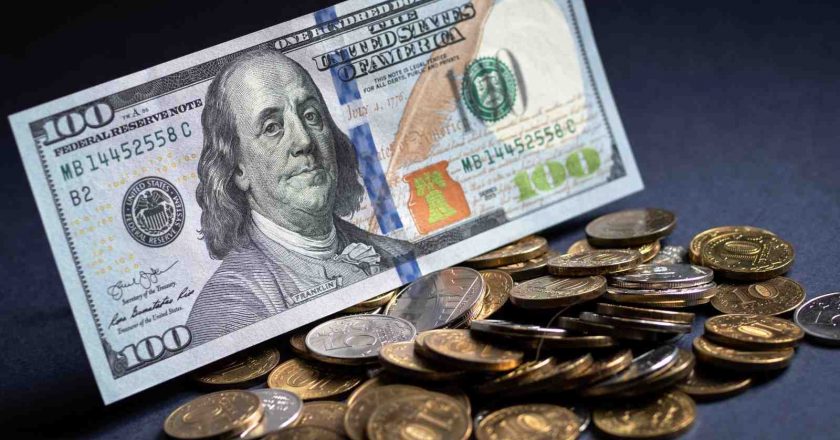
In the past five years, Russian citizens have experienced a reduction in both ruble and dollar incomes due to the inflation and abrupt fluctuations in national currency exchange rate, Kommersant business daily reported.
The fall in income in dollar terms has had little effect on the poorest groups of the population but hit those who are considered middle-class or close to it, experts say. Those include people who sell their car and buy a new one at least once every five years, purchase household appliances and other durable goods more often, and spend their vacation abroad. The share of foreign currency expenses reaches 30-50% of their overall expenditures, says Sergei Khestanov, economist and associate professor at the Russian Presidential Academy of National Economy and Public Administration under the President of the Russian Federation (RANEPA).
About 20% of Russian citizens, or 28 mio people, consider themselves middle class, yet actually the figure is significantly lower, sociologists say. According to estimates by Analytical Credit Rating Agency, one has to receive a monthly salary of at least RUR 121,000 ($1,900) in the largest cities and at least RUR 60,000 in other ones to be considered middle class, which does not exceed 7% of the population.
“Lower import costs that have been decreasing since 2014 plus a tendency for mobilization economy do not allow for growth in citizens’ well-being. So we are going to pull in our belts for a while; the main question is how fast we will have to do it,” Khestanov emphasized.