



In today’s rapidly evolving world marked by uncertainty, disruption, crises, technological transformation, geopolitical volatility, and emotional instability, the concept of antifragility has emerged as one of the most profound frameworks for understanding human resilience and leadership. Digital transformation and AI have become part of our everyday reality. While they bring easier solutions, they also create tension and stress, posing psychological challenges and questioning our uniquely human skills.

However, antifragility is not merely a modern intellectual theory or management concept. It is deeply rooted in the human nature.
Human beings were not designed merely to survive stress, hardship, volatility, or uncertainty. Rather, they were created with the extraordinary ability to evolve, adapt, strengthen, and grow through adversity. This is the true essence of antifragility.
Unlike something fragile, which breaks under pressure, or something merely resilient, which resists shock and remains the same, the antifragile person becomes stronger, wiser, more spiritually aware, and strategically capable through difficulty, challenge, and disorder.
From the earliest stages of existence, human life itself reflects antifragility. The human body strengthens through resistance. Muscles grow through stress. The immune system develops through exposure. Wisdom is cultivated through trials. Emotional intelligence evolves through pain and reflection. Leadership is refined through responsibility and hardship. Human civilization itself has continuously advanced through overcoming challenges.
For example, when renovating the apartment, we rely on the following characteristics of materials: high quality, aesthetics, eco-friendliness, resilience, and durability. As strange as this analogy may sound, these are precisely the qualities an antifragile leader should possess. A vase can be as beautiful as you like, but if “a mouse runs past and flicks its tail”, a beautiful work of art becomes a pile of tiny shards. A leader who loses composure when a problem arises and buries their head in the sand when danger threatens will not be able to cope with challenges, much less become an inspiring role model.
This reality demonstrates that antifragility is not external to humanity; it is embedded within human creation.
The most remarkable aspect of this antifragile human design is that it operates through the synchronization of three major dimensions of existence: the heart, the mind, and the spirit. These are not isolated components functioning independently. Rather, they are interconnected parts of a greater unified human system.
The heart represents emotional intelligence, empathy, courage, sincerity, compassion, intuition, and ethical grounding. The mind represents intellect, strategy, reasoning, analysis, creativity, adaptability, and decision-making. The spirit represents meaning, higher purpose, moral consciousness, values, transcendence, faith, and internal alignment.
When these three dimensions operate in harmony, the human being achieves extraordinary levels of adaptability, clarity, leadership, endurance, and growth. Antifragility therefore emerges not only from physical endurance or intellectual capability, but from holistic synchronization between emotional, intellectual, and spiritual dimensions.
Modern leadership discourse often focuses excessively on technical competencies, performance indicators, financial results, or organizational efficiency. While these remain important, true and sustainable leadership is fundamentally rooted in internal human architecture.
The new management paradigm, which has visibly transformed during the last 10 years has created many types of new leadership: emotional, dialogical, situational leadership and many others… But the new era of turbulence and powerful digital transformation has definitely created the demand for the “antifragile leader.”
A leader who possesses intellect without emotional balance may become arrogant or disconnected. A leader driven only by emotion without strategic reasoning may become unstable or impulsive. A leader without spiritual grounding may lose ethical direction, meaning, and long-term vision. Antifragile leadership therefore requires balance between all three dimensions. Resilience is another characteristic of an antifragile leader. Such a leader’s strategy is long-term, but more like a model that can be easily reassembled; it is unconventional, yet highly systematic and orderly.
The greatest leaders throughout history were individuals who transformed hardship into wisdom, pressure into maturity, uncertainty into innovation, and setbacks into opportunities for renewal. Their leadership capacity was not built in comfort; it was forged through adversity.
This reveals another critical dimension of antifragility: suffering and uncertainty are not necessarily destructive forces. When understood correctly, they become developmental mechanisms.
From the perspective of the digital environment, for such a leader it becomes a tool, a window of opportunity, but not “a compass” and certainly not “an idol”. With high-quality development, a neural network can certainly replace a boss, but it can never replace a leader, because a leader is a vibe, a wave, an energy, a charisma!
Human beings often attempt to avoid discomfort, uncertainty, criticism, failure, or pressure. Yet many of the greatest transformations in individual and societal history emerged precisely because individuals were forced to confront instability and challenge. Adversity reveals hidden capacities that comfort often conceals.
In leadership, this becomes especially significant.
Leadership is not merely a position, designation, or institutional authority. Leadership is fundamentally the ability to absorb volatility while creating direction, confidence, trust, and meaning for others. True leaders are not those who function only in stable environments; rather, they are those who become clearer, wiser, calmer, and more effective amidst uncertainty. Antifragility is an inner core, and at the same time, the ability to quickly adapt to external conditions, changing without betraying oneself. A leader may reconsider their values and principles, but they are always true to their mission, life philosophy, and moral compass.
An antifragile leader therefore does not fear change. Instead, such a leader learns from disruption, adapts through volatility, and transforms crises into strategic opportunities.
This becomes increasingly relevant in today’s world where institutions, economies, societies, and even personal identities are constantly challenged by rapid technological, economic, environmental, and social changes. Leaders who remain rigid, ego-driven, or dependent upon static systems often collapse under pressure. In contrast, leaders who continuously learn, evolve, self-reflect, and internally strengthen themselves become capable of navigating uncertainty with confidence.
One of the most overlooked aspects of antifragility is self-awareness.
The recognition and internalization of one’s own antifragile nature fundamentally changes how a person approaches life, responsibility, and leadership. Once an individual understands that adversity is not merely an obstacle but also a developmental catalyst, fear begins to transform into opportunity. Psychological sensitivity—deep attention to the individual needs of people, teams, and organizations—and skills like hyper-personalization and human-centricity are among the most sought-after capabilities in an era of neural networks and robotics.
This realization develops emotional maturity, strategic patience, and intellectual flexibility.
A leader who internalizes antifragility no longer views failure as final. Instead, failure becomes feedback. Criticism becomes refinement. Pressure becomes preparation. Uncertainty becomes a possibility. Even setbacks become instruments for future strength.This mindset creates leaders who are not psychologically dependent on constant validation or ideal conditions. Rather, they develop the capacity to remain internally anchored regardless of external instability.
Importantly, antifragility also requires humility.
The antifragile leader recognizes that growth is continuous and that certainty can become dangerous. Excessive ego creates fragility because it resists learning, adaptation, and correction. Humility, however, enables openness, reflection, and evolution. Lifelong learning is not just a concept for such leaders; it is a philosophy, the way of life, the constant moving to “acme” – the peak of the professionalism where they can share the deep expertise with others. Lifelong learning becomes strategically planned, meaningful, trendy and tightly connected to the expected results.
This is why some individuals become stronger after crises while others collapse under similar circumstances. The difference often lies not in external events but in internal orientation.
An antifragile orientation accepts that volatility is inevitable and seeks wisdom within it.
A leader is ecological. This is the ecology of the space they create around themselves, and this is a space in which one can certainly survive storms and turbulence; it is a psychologically comfortable environment in which, regardless of what is happening outside, there is room for joy, growth, and professional creativity. This is both an ecology of thoughts and an ecology of life in general.
Furthermore, the relationship between antifragility and leadership extends beyond individuals into institutions, societies, and nations. Institutions that encourage innovation, decentralized thinking, adaptability, ethical grounding, diversity of ideas, and learning from failure often become stronger over time. Conversely, systems built entirely upon rigidity, excessive control, fear of experimentation, or suppression of independent thinking become fragile.
This principle is highly relevant today for governments, financial institutions, corporations, educational systems, and even communities. Sustainable progress requires antifragile structures capable of adapting to evolving realities while remaining rooted in enduring values.
At the societal level, human civilization itself reflects antifragility. Across history, societies have repeatedly emerged stronger from wars, crises, collapses, pandemics, economic disruptions, and social transformations. Human advancement has rarely occurred in perfect stability. Progress often emerges through adaptation and reinvention.
From a deeper philosophical perspective, the antifragile nature of humanity reflects profound wisdom within human creation itself. Human beings were not designed for passive existence. They were designed for continuous growth, learning, responsibility, creativity, stewardship, and evolution.
The synchronization of heart, mind, and spirit allows humanity to transcend fear, uncertainty, and limitation.
This becomes the foundation of transformational leadership.
A truly antifragile leader inspires others not merely through authority, but through presence, wisdom, emotional stability, ethical integrity, strategic clarity, and the ability to transform complexity into direction.
In the future, the world will increasingly require leaders who are internally strong rather than merely institutionally powerful; leaders who can integrate technology with humanity, innovation with ethics, strategy with compassion, and growth with sustainability.
Antifragility therefore is not simply about surviving disruption. It is about becoming elevated through it.
The human being, in its purest and most synchronized form, possesses an extraordinary capacity to evolve through challenge while remaining connected to purpose, values, and meaning.
The recognition, understanding, internalization, and practical application of this reality may become one of the defining leadership necessities of the modern era.
Ultimately, the antifragile leader is one who understands that the greatest strength does not emerge from avoiding storms, but from learning how to transform storms into instruments of wisdom, growth, renewal, and purposeful leadership.
In discussing ‘antifragile leadership,’ we must acknowledge Nassim Nicholas Taleb, who coined the term ‘antifragility’: “My ideal of a modern Stoic sage is a person who transforms fear into prudence, pain into information, mistakes into initiative, desire into action.”
By Dr. Mughis Shaukat (Bahrain/Oman) and Dr. Alina Valencia (Russia)
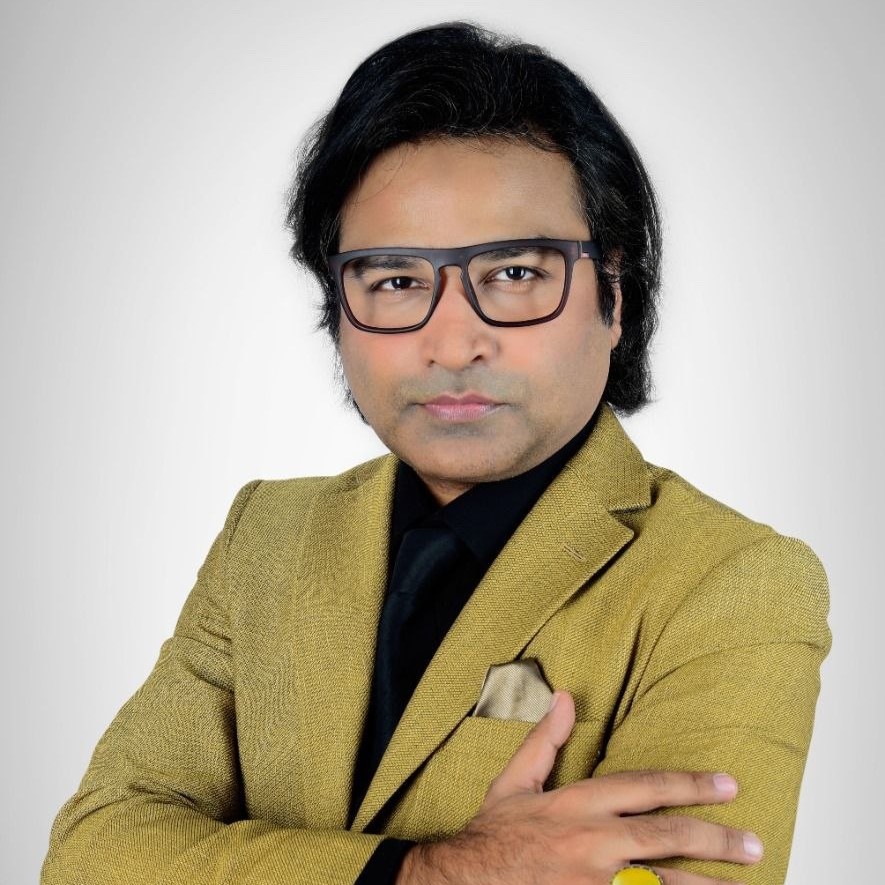
Dr. Mughees Shaukat
Islamic Investment & Fund Management, GCC, CIS & Asia| Investment Board Member, Ijara IVFRT, Republic of Tatarstan, Executive Advisor, Islamic international Rating Agency, Bahrain and Oman, Managing Director, Panacea Consulting, Bahrain; Director Shari’ah Structuring for Carbon Credits, CarbonCX, Canada; Fintech & Digital Commerce Specialist, Massachusetts Institute of Technology, MIT, USA

Dr. Alina Valencia
PhD in Management and Entrepreneurship Psychology, PhD in Psychology. Associate Professor at Innopolis University. Member of the Academic Council, mentor of the Technological Entrepreneurship program, and academic supervisor. Member of the Expert Council of the Venture Capital Commission of the Council of the Chamber of Commerce and Industry of the Russian Federation for Financial, Industrial, and Investment Policy. Business consultant, head of the A-line consulting agency, and leader of the ASI “Competence Platform” project.