



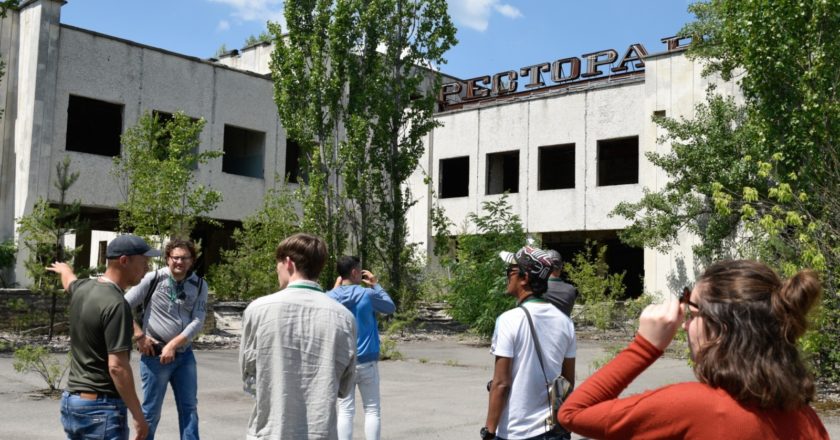
Radioactive dust, disintegrating buildings and forest fires, which provoke the spread of radioactive nuclides, can be dangerous for tourists visiting the Chernobyl exclusion zone, Natalia Shandala, Deputy General Director for science and biomedical technologies at the Avetik Burnazyan Federal Medical Biophysical Center, told a news conference at Rossiya Segodnya on Tuesday, August 6.
“There is still radioactive dust in the exclusion zone, which can rise and float in the air because of drafts. We do not know what effect these dust particles can have on the human body,” the expert noted.
According to her, another threat is eroding buildings that can collapse at any time.
“If there is even a small earthquake, these structures may collapse, and this danger must also be taken into account, because Chernobyl is also a seismic risk zone,” Natalia Shandala added. “Forest fires, which provoke the transfer of radioactive nuclides, are also dangerous. A fire would immediately cause a spike in hygiene figures in the exclusion zone.”
She added that no other country officially allows tourism in nuclear accident zones.
“Tourists are not allowed to visit the exclusion zone in the US state of Pennsylvania, where a nuclear power plant accident occurred in 1979, or in the 20-kilometer zone near the Japanese Fukushima, where an accident occurred 7 years ago,” she concluded.
Earlier, President of Ukraine Vladimir Zelensky signed an executive order allowing tourists to visit Chernobyl.