



The state of forests, water quality, the development of volunteering and energy are increasingly influencing not only the environment but also the resilience of the economy. The main objectives of environmental policy several years ago were to reduce emissions and shrink humanity’s impact on the climate. Today’s objectives are to learn to live under new conditions, to tackle modern environmental challenges, and to reduce the damage they cause. Alexander Chikin, Director of Sustainable Development and Digitalization at the Save the Forest eco-service, explained how to achieve this and what needs to be done.
Rising temperatures, rising prices
One of today’s key challenges stems not so much from individual weather anomalies as from their cumulative impact.
“When major climate phenomena such as El Niño – which causes unusually warm surface waters in the Pacific and disrupts weather patterns around the world – intensify, the effects extend far beyond the Pacific region. They affect global agriculture and logistics, as well as commodity and food prices, indirectly impacting the Russian economy,” the expert notes.
According to Alexander Chikin, the main risk for Russia is not a shortage of particular products, but rather an increase in imported food inflation. Lower crop yields in major exporting countries push up prices for coffee, cocoa, rice, palm oil, as well as certain fruits and seafood.
Forests as climate infrastructure
Against this backdrop, the role of natural ecosystems is also being reassessed. Forests, for example, were once viewed primarily as a source of timber and a means of offsetting emissions. Today, experts increasingly see them as an integral part of climate adaptation infrastructure.
Forests in water protection zones and watersheds play a crucial role, being among the areas where much of a river’s water regime is determined. As the Save the Forest eco-service explains, these “lungs of the Earth” significantly increase the amount of water that infiltrates the soil instead of running off the surface. This helps replenish groundwater reserves, reduce soil erosion, stabilize riverbanks, and maintain a more stable hydrological balance in rivers and lakes.
Essentially, these ecosystems form a natural system that regulates the water balance, provides natural filtration, and protects the soil – all at the same time. Their importance will only increase as droughts and extreme precipitation events become more frequent.
Environmental volunteering
Interest in environmental issues is growing, and so are volunteer movements. In recent years, environmental volunteering has become one of the fastest-growing forms of civic engagement. According to Alexander Chikin, several factors are driving this trend: the development of digital platforms, the expansion of corporate volunteering programs, government support, and the growing availability of accessible ways to get involved.
At the same time, people’s motivations are changing. Whereas environmental initiatives were once often seen as one-off events, people today increasingly view them as long-term projects aimed at restoring natural landscapes.
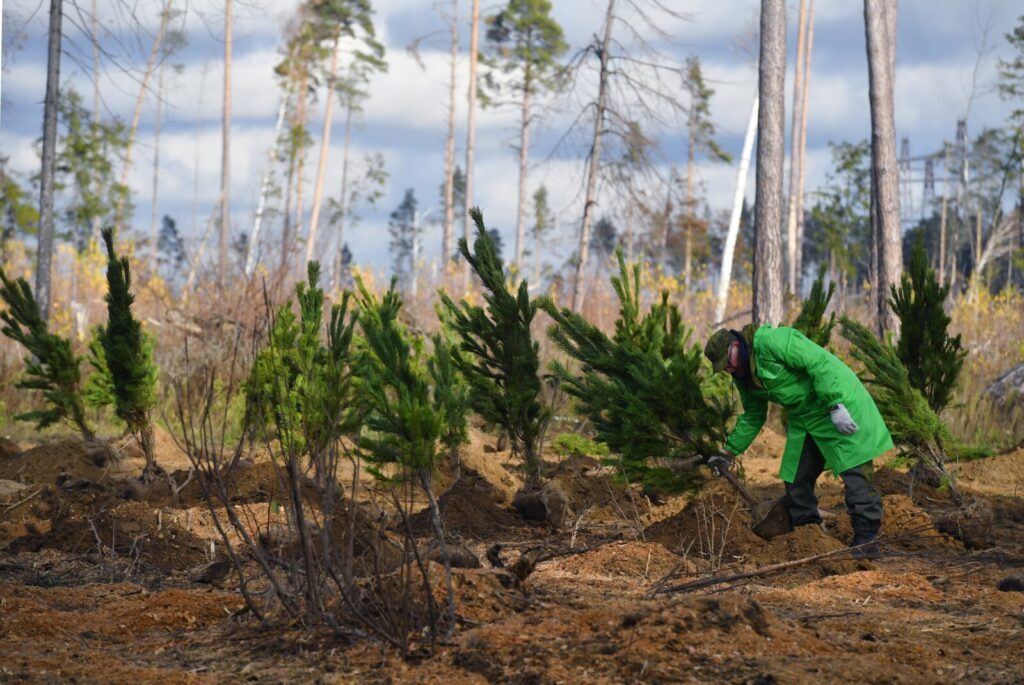
“We regularly organize reforestation campaigns in different regions of the country. Our goal goes beyond simply planting young trees. Experts explain to participants how forest ecosystems function, what forest restoration involves, and how forests contribute to the health of water bodies. It’s a fantastic format that combines hands-on volunteering with environmental education, allowing people to see the immediate results of their efforts for our planet,” Alexander Chikin says.
The Concept for the Development of Volunteering through 2030, which aims to involve more citizens and companies in socially beneficial activities, places precisely this kind of practical project at its center.
The energy transition is taking different paths
The energy sector is another key area of environmental transformation. Across the globe, the share of renewable energy continues to grow. In recent years, significant investment has gone into solar and wind power, energy storage systems, and hydrogen technologies.
At the same time, Russia is following its own path.
“Russia is not prioritizing the development of ‘green’ energy. The main emphasis is on nuclear and hydroelectric power, while solar and wind energy remain niche, localized initiatives. This is due both to the specific characteristics of Russia’s energy sector and to the need to maintain a stable energy supply,” Alexander Chikin notes.
At the same time, experts point out that low-carbon technologies are developing globally at a much faster pace. Solar power, energy storage systems, and the equipment associated with them are increasingly emerging as new drivers of global economic growth.
Environmental issues as an economic factor
Today, environmental initiatives extend far beyond the traditional goal of protecting nature. The condition of forests affects water quality; climate conditions affect agriculture and prices; volunteering helps drive environmental projects; and new energy technologies are becoming an increasingly important part of economic development. As a result, environmental issues are increasingly being viewed not only as a matter of environmental protection, but also as a factor in economic resilience and quality of life – one whose relevance is likely to grow even further in the years ahead.