



Perm-based automaker Russo-Balt, which revived the pre-revolutionary Russian automotive brand, is planning to develop a passenger-and-cargo version of its F20 electric van. The company says there is already demand for the new configuration, but it must first complete certification of the standard F20. No launch date has been announced yet.
The standard F20 is an electric van featuring an unpainted stainless-steel body, a payload capacity of around one metric ton and a range of up to 400 km (249 miles). The vehicle is priced from 6.5 million rubles ($81,000), with the first deliveries to customers scheduled for January 2027.
Automotive experts note that the new van is a copy of China’s Weiqiao V90, which sells for about 1.6 million rubles ($20,000) in the Chinese market. Russian media have also compared the F20 with Tesla’s Cybertruck, which starts at $69,000 in the United States.
In addition to the passenger-and-cargo version of the F20, Russo-Balt is developing the all-wheel-drive C55 electric crossover, rated at 550 hp, as well as a 12-seat minibus.
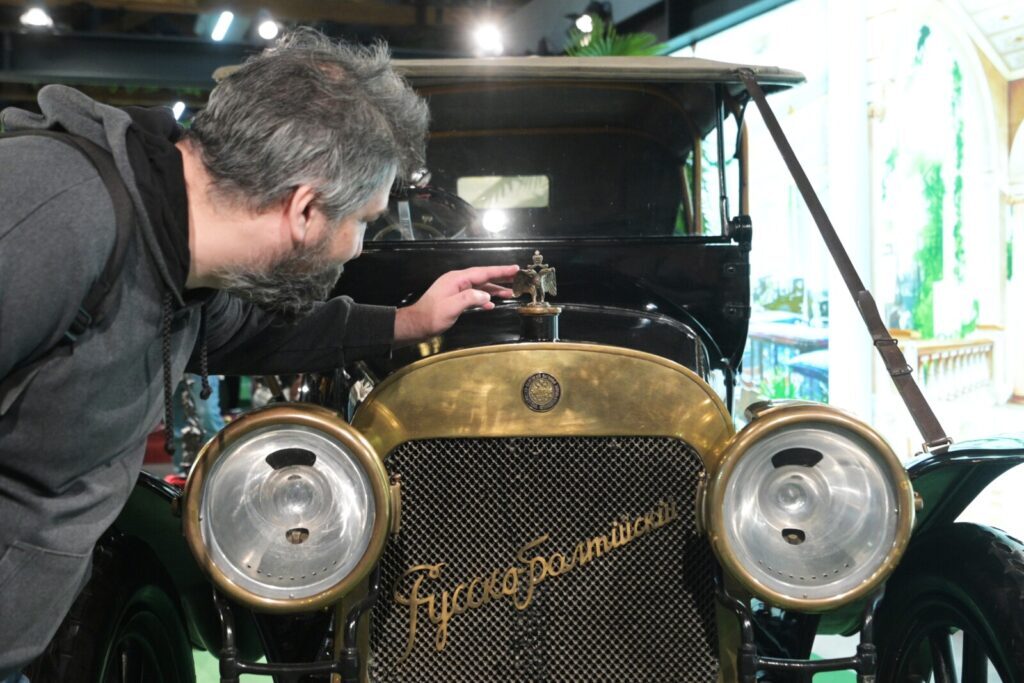
Russo-Balt produced vehicles in the Russian Empire from 1909 to 1918 and was one of the country’s first mass-production automakers. The vehicles were manufactured at the automotive division of the Russo-Baltic Wagon Factory in Riga. Around 570 cars were produced in total. Russo-Balt vehicles took part in international rallies and were also purchased by members of the Russian imperial family.
Following the 1917 Revolution, the company was nationalized and production under the historic Russo-Balt brand came to an end. An earlier attempt to revive the marque was made in the 2000s with the Russo-Baltique Impression supercar, but the project never reached mass production.