



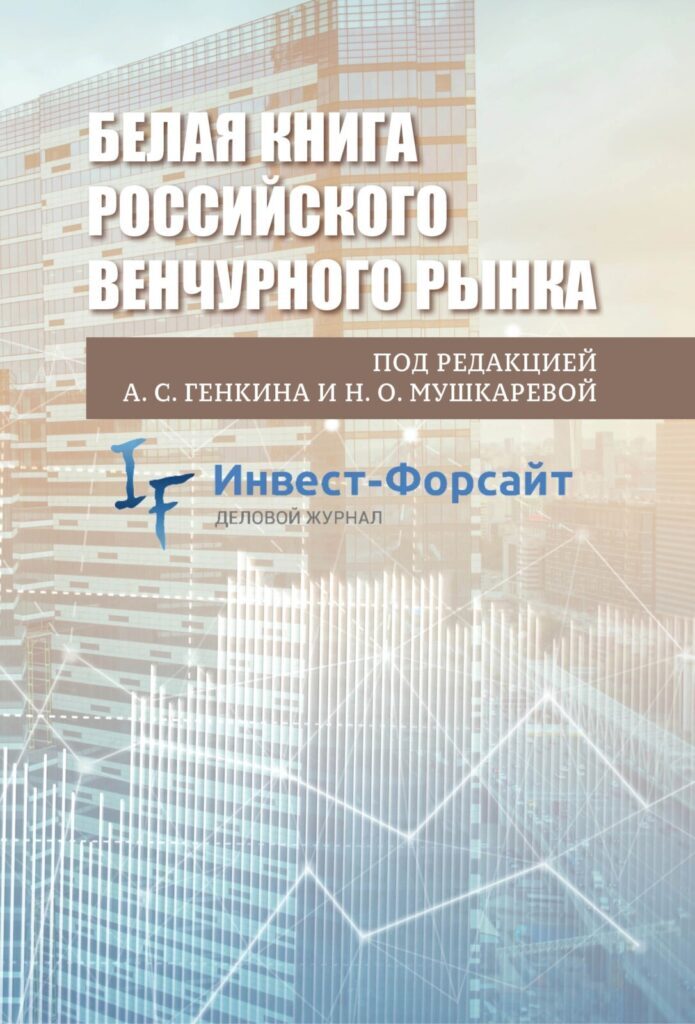
Russia has published its White Paper on the Venture Capital Market – a wide-ranging study examining the state, systemic challenges, and future trajectory of the country’s venture industry. The publication was prepared with support from the Financial Markets and Investment Council at Russia’s Chamber of Commerce and Industry.
Contributors to the volume span the full spectrum of the venture ecosystem, including investors, entrepreneurs, mentors, and specialists in financial and product development for startups. The author and editorial team also feature experts working across government programs, public-private partnerships, corporate ecosystems, and family offices.
According to the authors, this diversity of voices allows the Russian venture market to be viewed not as a siloed sector, but as an integrated system where the interests of entrepreneurs, investors, corporations, and the state converge.
“The work on this book proved highly rewarding, as the diverse team of co-authors presented a range of sometimes competing views on how to tackle the most pressing challenges facing the Russian venture capital market. Bringing these positions together in search of a common thread was itself a creative endeavor — one that I very much hope we have accomplished,” notes Professor Artem Genkin, the book’s scientific editor and author of several chapters. Artem Genkin holds a Doctorate in Economics and is the founder of the business publication Invest Foresight.
The volume also dedicates significant attention to the history of Russian venture capital, tracing its evolution, established practices, and key players. The authors argue that the sector has already developed a distinct identity and is now firmly embedded in the broader economic fabric. This historical material is likely to appeal to students, researchers, and analysts, while the analysis of current trends and future scenarios is aimed squarely at industry professionals.
A substantial portion of the study takes stock of the industry’s systemic ailments. Among the issues highlighted: a shortage of early-stage funding, the notorious “valley of death,” limited engagement from traditional venture funds, and persistent difficulties in attracting private capital.
The authors also examine institutional and legislative hurdles, including regulatory complications around stock option programs, the high cost of setting up investment vehicles, and the narrow range of instruments available for working with retail investors.
Exit strategies receive particular scrutiny. With foreign IPOs largely off the table and M&A activity cooling, Russian investors and entrepreneurs are being forced to explore new routes to liquidity and returns – a challenge compounded by competition from conventional financial instruments in a high-interest-rate environment.
Separate sections explore venture capital’s role in advancing technological sovereignty, international precedents for managing closed investment markets, investor protection mechanisms, and ways to improve financial and legal literacy among startup founders.
Yet the White Paper does not stop at diagnosis. Its concluding chapter puts forward concrete proposals for overhauling the venture infrastructure. Among the ideas under consideration: reform of closed-end mutual funds, the expansion of crowdfunding platforms, tax incentives for investors, and efforts to extend the startup ecosystem beyond Russia’s largest metropolitan areas.
In sum, the publication offers a retrospective view of the Russian venture market, a sober assessment of its present condition, and a practical agenda for its evolution. The authors envisage the book as a foundation for substantive dialogue among regulators, investors, and entrepreneurs – with the ultimate goal of building a more resilient venture ecosystem in Russia.