



An innovative fire detector was demonstrated at the Skolkovo Technopark by Skolkovo Foundation resident company KB Somov, Skolkovo’s press service repors.
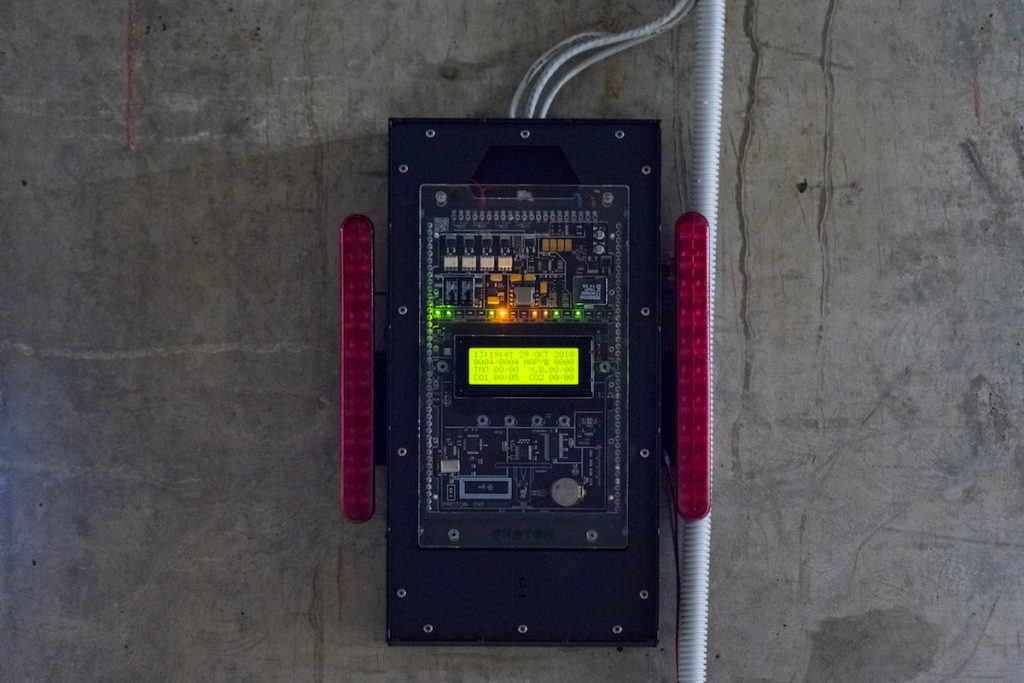
KB Somov’s Graviton Multisensor detectors are 10 times more sensitive than standard smoke detectors, says their inventor Maxim Somov, who has been dubbed ‘the Urals [Steve] Jobs’, meaning they are effective even in large spaces with high ceilings, such as warehouses, and work faster than any existing systems. The sensors in the detectors respond to the air components around them.
“They work not by detecting smoke, but by detecting the smell. It has an algorithm of three parametres: carbon monoxide, which is the cause of death in 70 percent of fatal fires, as well as carbon dioxide and hydrogel,” said Somov.
The device also responds to temperature.
But “that’s the last thing taken into account: when the temperature is going up, that’s already a serious fire, so it’s too late,” he added.
The product is not cheaper than current fire prevention systems, but it is 10 times more sensitive. Sensors should be placed with no more than 10 metres between them to ensure efficient protection of premises. That means that in spaces of up to 100 square metres, one or two sensors are enough. The detectors function perfectly amid fluctuations in temperature and humidity.
KB Somov won first prize at the Startup Village at the Skolkovo innovation centre in 2015, and subsequently became a resident of the Skolkovo Foundation. The company makes a range of security products, ranging from burglar alarms to devices for detecting hidden occupants in cars. The fire detector was designed and built with support from the Skolkovo Foundation.
As well as installation in homes and offices, Somov says the ideal premises for using his fire detectors are archives, timber-processing plants and logistics sites: anywhere where there is a lot of paper, wood and products made from them.
He is also keen to test the detectors in an airborne plane, where he believes they would be a highly effective way of ensuring that passengers don’t smoke in aircraft toilets, in contravention of airline regulations. The company is confident their system would swiftly detect even a match being struck in an aircraft toilet, but, Somov laments, it is considerably harder to get permission to carry out tests on board an aircraft than in the Skolkovo Technopark.
The company is currently in the process of obtaining certification for the product: a lengthy process that Somov says can take up to two years.