



Data on industrial production for May published by the Federal Statistics Service have cast further doubt on the sustainability of the economic recovery in the second quarter. Industrial output continues its decline after seasonal adjustments, consumer sentiment is deteriorating, and support from the export sector may weaken in tandem with declining commodity prices.
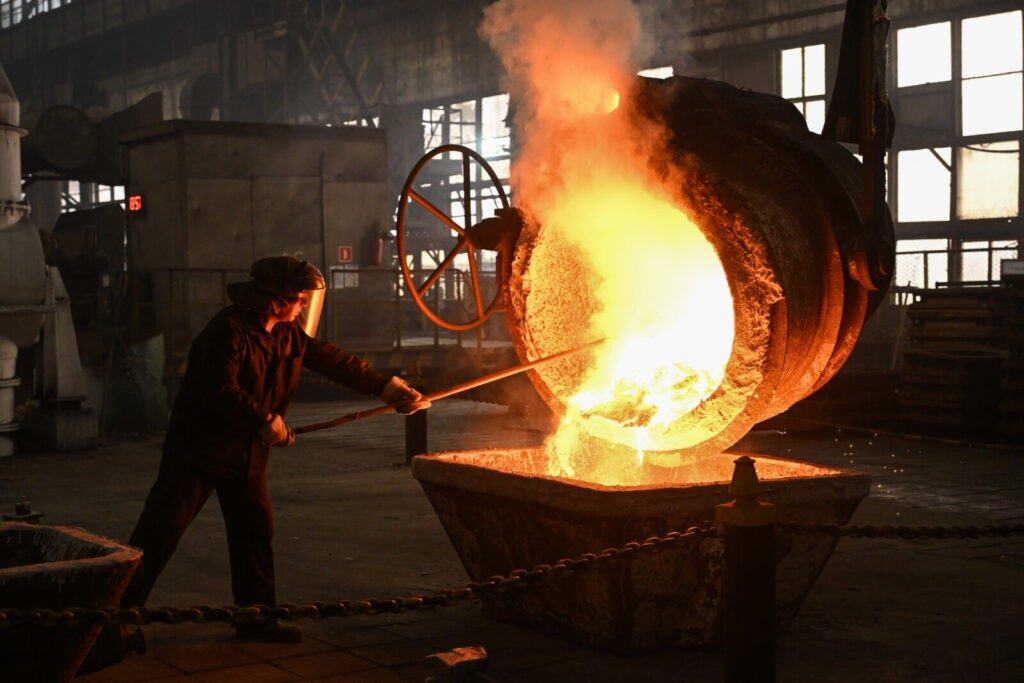
From a strategic planning perspective, the second quarter appears less as a period of acceleration and more as a phase of holding ground, according to Denis Astafyev, entrepreneur, fund manager, and founder of the SharesPro fintech platform. Industry, which was expected to serve as a pillar of growth, is now acting more as a drag: the May output figures indicate that the momentum of recovery has dissipated, and any further upward movement will require substantially greater effort. The downturn in extractive industries not only weighs on the revenue of individual companies but also strains adjacent supply chains and logistics.
Consumer demand has ceased to be a predictable buffer. It no longer compensates for external volatility; instead, it has become a source of uncertainty itself – spikes in activity are followed by protracted periods of near-zero dynamics. For businesses, this implies that they can’t rely on organic client-driven growth; they will need to rigorously manage the sales funnel, maintain tight control over cost structures, and closely monitor turnover ratios, the expert emphasizes.
According to Astafyev’s assessment, the external sector, which until recently provided a short-term impetus to the economy, is now functioning more as a risk factor. Commodity prices have fully priced out the geopolitical premium, and Brent crude’s return to $73 per barrel is not merely a number but a signal of tightening foreign-exchange liquidity. For exporters, this translates into margin compression; for importers, it adds pressure on input costs. In such an environment, the winners are not those waiting for an improvement in market conditions, but those who have proactively restructured procurement, negotiated currency corridors, or secured alternative supply channels.
“Structurally, the economy increasingly resembles a ‘patchwork quilt’: some segments are posting solid growth driven by state orders and large-scale projects, while others are effectively stagnating. This is also evident in the sectoral breakdown – when the share of industries posting quarter-over-quarter declines jumps to 71%, it is no longer a temporary downturn but a systemic reconfiguration. In this context, businesses should avoid trying to be present everywhere; instead, they need to identify narrow but resilient niches and build maximum operational efficiency within them,” the entrepreneur argues. “For the remainder of the year, I would factor in a scenario of ‘managed growth – without sharp upswings, but with room for occasional success. GDP growth in the range of 1-2% is not ambitious, but it is realistic, provided the public sector continues to sustain activity. At the same time, businesses should not rely on averaged forecasts; it is more important to focus on their own drivers – access to financing, demand stability within their niche, and supply-chain flexibility.”
The key variables will remain the Central Bank’s key rate and the cost of credit: as long as the rate remains high, investment projects will be subjected to a very stringent screening process. Commodity prices will remain a key driver of the external economic environment and the ruble’s exchange rate, influencing both inflation and household purchasing power. While fiscal policy and government procurement can cushion some of the negative effects, they cannot fully replace private market demand, the expert believes.
“The biggest risk is a further decline in commodity prices, which would put additional pressure on the ruble and drive up costs. The second is prolonged tight monetary policy, which continues to limit businesses’ access to affordable financing for expansion. The third is increasing market segmentation, where growth is concentrated in a handful of major sectors while the rest of the economy is left to survive by preserving resources,” Denis Astafyev says. “Under these conditions, the most effective strategy is not to chase scale, but to strengthen operational control: closely manage cash flow, reduce long-term liabilities, increase the share of predictable contracts, and avoid wasting resources on risky experiments. Today’s economy is no longer about rapid growth – it is about resilience. The winners will be those that can operate effectively amid uncertainty and adapt quickly to changing market conditions.”